

.png)


.svg)
.svg)
.svg)
AI trust gaps, wind-down lessons, exits, platform strategy, and a NATO Innovation Fund session with 100+ corporate investors at London Counter on April 30th, 2026.
TL;DR
• Only 1% of AI investment flows to trust and assurance tooling, creating a structural gap Kaare Helle (DNV Ventures) projects becomes a $1 trillion market by 2034.
• The best CVC platform programs are increasingly centering the founder. Honda, BMW i Ventures, and eBay Ventures all shared different ways of delivering founder and corporate value.
• Lina Arbelaez, former at Anglo American, laid out how a corporate CVC wind-down played out and what she would build differently the next time around.
• Companies can list on the London Stock Exchange with £10-30M in revenue. The session from Neil Shah and Mark Gallagher challenged the assumption that public markets remain out of reach for growth-stage companies.
• NATO's €1B Innovation Fund doesn't bet on founders and hope for strategic fit — its cleared partners get classified briefings on real capability gaps, then source startups into them

On April 30, 2026, 100+ European corporate venture investors gathered for the third annual London Counter, the latest stop on the Global Counter Series following events in Singapore and Japan. Seven sessions. One day. No agenda padding.
The format is designed for conversations that would not happen at a standard industry conference. These are not panel performances. They are working sessions between practitioners who are navigating the same structural pressures in real time.
Here is what came out of them.
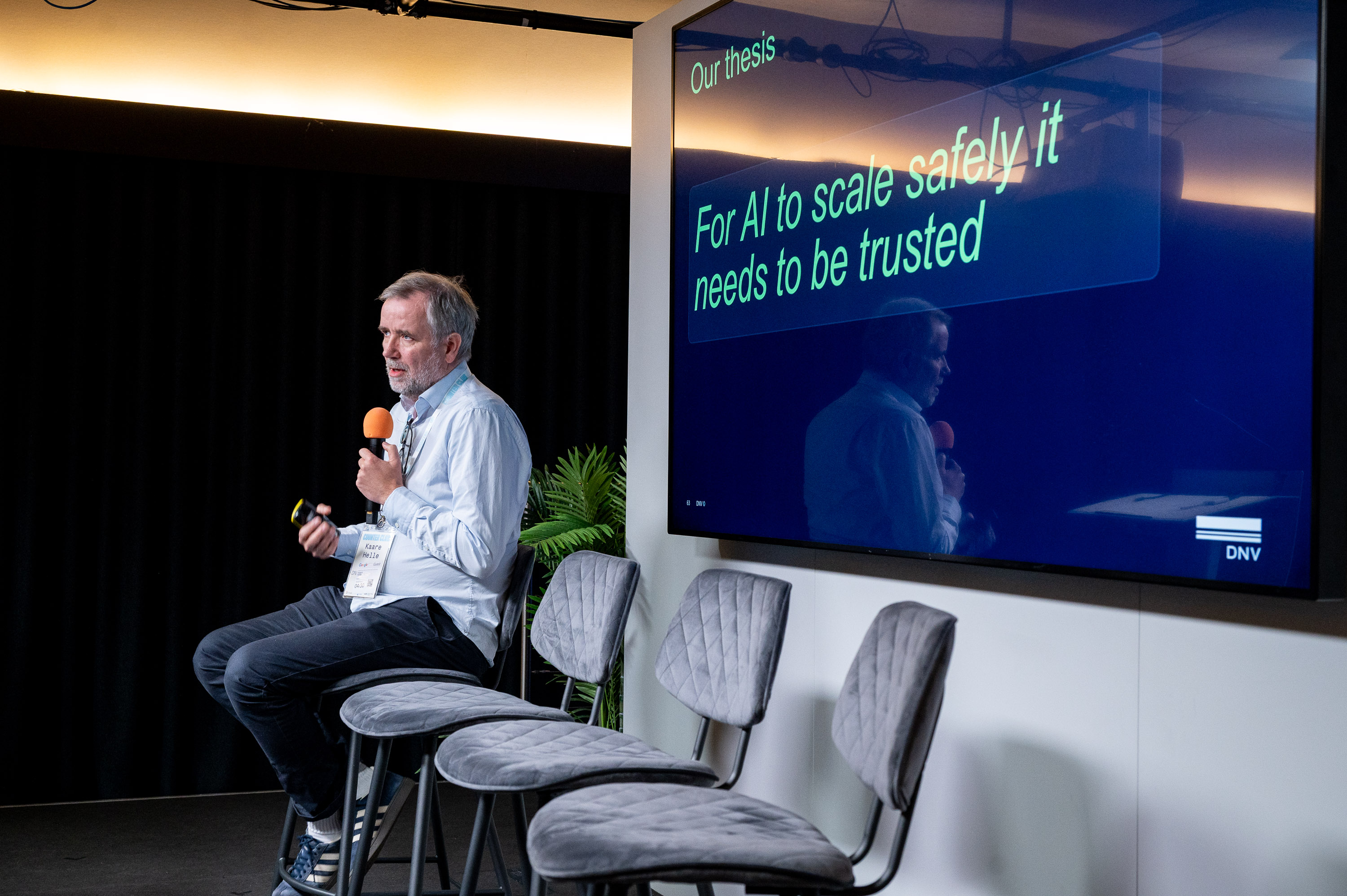
Kaare Helle, Venture Director at DNV Ventures, opened with a number that stopped the room. Only 1% of current AI investment flows to trust and assurance tooling.
DNV certifies 80,000 ships as safe to sail. Helle's argument was that the same assurance logic applies to AI, and the infrastructure to do it at scale barely exists yet. Corporates are already spending over 10% of their AI budgets qualifying models before any deployment. The adoption barrier is not capability. It is not cost. It is the inability to explain model outputs to executives, regulators, and compliance teams.
Helle argues that enterprise AI programs frequently exit at proof-of-concept stage. The failure point is explainability, not model performance. Neural outputs that cannot be articulated to a compliance team represent unacceptable risk regardless of accuracy metrics.
Helle projects that AI assurance becomes a $1 trillion market by 2034. The trajectory mirrors how cybersecurity emerged after cloud adoption. Trust infrastructure always follows capability at scale. Regulatory pressure in Europe and growing enterprise compliance mandates will accelerate demand significantly over the next decade.
"When AI is trusted, it can scale safely and create value. Without trust, it stays stuck in pilot. That is exactly where most enterprises are right now."
-Kaare Helle, Venture Director, DNV Ventures
For CVCs evaluating AI investments, the implication is direct. Founders building assurance infrastructure are solving a real and growing budget line, not a theoretical problem. That changes the risk profile considerably. For more on how enterprise AI is being deployed right now, see our post on The Agentic Shift.
Three platform leads from Honda Xcelerator Ventures, BMW i Ventures, and eBay Ventures compared notes on what works in CVC platform building. The most honest moment came from Julien Fredonie.
"Corporates spend too much time looking at themselves. They are not the heroes in this story. The founder is the hero."
-Julien Fredonie, Head of Honda Accelerator Ventures

Fredonie’s framing cuts against the potential instinct of corporate programs to optimize the portfolio relationship around internal reporting requirements. When corporate agendas drive the relationship, deal flow quality drops, founder trust erodes, and the program ends up serving internal stakeholders rather than the startups it was built to back. Founders talk to each other. A reputation for genuine value compounds faster than any conference presence.
What the best programs are doing differently:
BMW i Ventures tracks stage progression rather than activity. Internal interest to pilot project to commercial contract. One company advancing to commercial contract is worth more than twenty portfolio introductions to business units.
Honda puts a senior executive in direct, sustained collaboration with a single portfolio company for four consecutive months. Two hours a week, sixteen weeks straight. That level of commitment is a signal founders notice and mention to each other.
eBay Ventures goes further still, presenting founders to internal business units before committing capital. Early exposure surfaces strategic misalignment when it is still cheap to walk away rather than after a deal closes.
This session extended the conversation that started at the first Platform and Portfolio Development Summit in San Francisco last year. The through-line across both: the CVC units that earn the best deal flow are the ones that have structurally redesigned their programs around founder outcomes, not corporate reporting requirements.
The most candid session of the day was moderated by Counterpart Ventures co-founder Patrick Eggen. Lina Arbelaez, founding MD of Anglo American Decarbonisation Ventures, walked through the rise and structured wind-down of the unit she built.
"I was focused on speed. If I had to do it again, I would focus on resilience."
-Lina Arbelaez, Fmr. Founding MD, Anglo American Decarbonisation Ventures
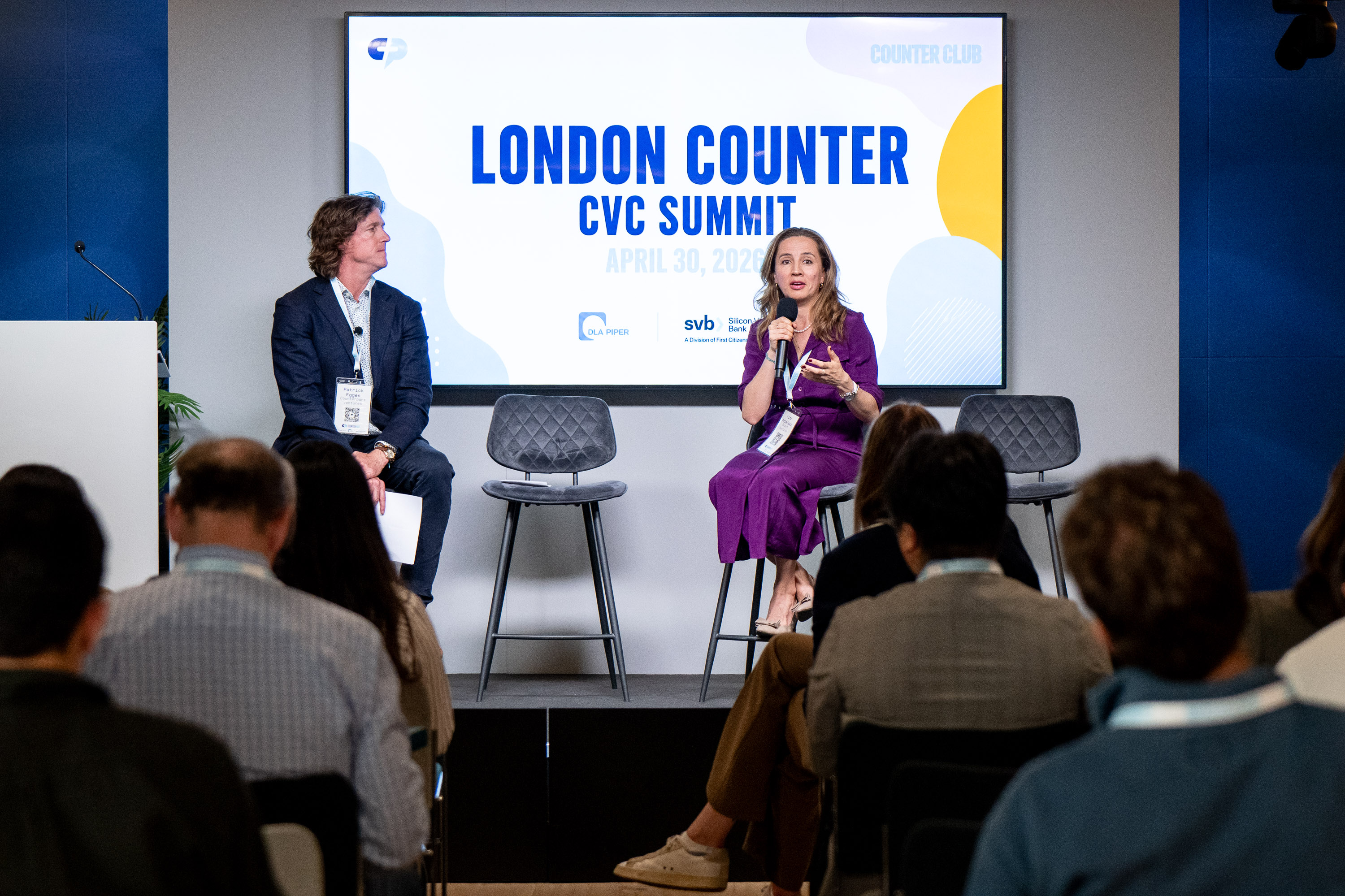
The framework Arbelaez laid out is applicable well beyond Anglo American:
Serve multiple time horizons. Horizon 1 and Horizon 2 deliverables give leadership something defensible in any market environment. A CVC unit that only produces Horizon 3 results has no cover during capital tightening or a corporate strategic pivot.
Build multiple internal champions. A unit with a single executive sponsor is one leadership change away from losing its mandate overnight. Distributing value across multiple business units makes the CVC's continuation a cross-functional interest.
Read context, not assurances. Mandate language, resource allocation signals, and board priorities tell you more than stakeholder sentiment does.
Neil Shah from the London Stock Exchange and Mark Gallagher from SVB ran a session that pushed back on a widely held assumption: that public markets are out of reach for growth-stage companies.
The actual entry bar for the LSE is £10-30M in revenue. Over a third of LSE members are headquartered outside the UK. A new mechanism called PISCES now lets pre-IPO companies control which investors can buy and sell their shares in secondary markets, with participants seeing £9-11M in UK tax savings and zero stamp duty exposure.
"The IPO is the slowest way to get rich. But it is the one that aligns incentives for the long game."
-Neil Shah, Director, Primary Markets, London Stock Exchange

The room pushed back on dual-track processes. Shah was direct: IPO processes are calibrated for long-term institutional narratives. M&A processes maximize immediate exit price. The audiences are incompatible. Running both simultaneously sends contradictory signals and erodes credibility with both investor sets.
The session also validated something the Counter VI program covered in San Francisco: the exit environment in 2026 is more nuanced than the headlines suggest, and CVCs who understand the full range of capital optionality are better positioned to serve their portfolio companies through to liquidity.
Erin Hallock, Partner at the NATO Innovation Fund, opened the geopolitics session with a structure that most VCs in the room had never seen up close. The fund is a €1 billion multi-sovereign vehicle with 24 LPs drawn from member defense ministries and sovereign wealth funds. It operates independently from NATO’s command structure, but its four investment partners all hold security clearances required to access classified capability gap briefings. That access is the fund’s most durable edge.

The investment process starts with NATO identifying active operational gaps, then sourcing companies into those gaps rather than backing founders speculatively and hoping for strategic fit later. Three portfolio companies are currently deployed operationally in Ukraine. That live feedback loop shapes future investments in ways no lab diligence process can replicate. CVCs at the summit who use parent company subject matter experts for technical diligence will recognize the model. The NATO version runs it with 3,000 scientists and PhDs across 46 member nations.
The pattern across our Global Counter Series is consistent. The conversations CVCs want to have are not the ones that get covered in industry press. They are about organizational resilience, mandate survival, founder relationships that actually work, and capital structures that make sense in a shifting macro environment.
The London Counter gave those conversations a room.
Next up on the Counter Series: the 4th Annual Women in CVC Summit on May 14 in New York at Hearst Tower, and the public launch of Counter Club Japan in Tokyo on May 13, with 300+ corporates committed in the first two months.
If you are a CVC professional and not yet part of the Counter Club community, join the 750+ unique corporate venture units already inside.
Join Counter Club at counterclub.vc
What is the London Counter CVC Summit?
The London Counter is an annual event hosted by Counterpart Ventures as part of the Global Counter Series, bringing together corporate venture capital professionals for practitioner-led sessions on investing, platform strategy, exits, and CVC operations. The 2026 edition took place on April 30 at Google Kings Cross and hosted 180 investors from the UK, US, and Europe.
What did CVC leaders say about AI at the London Counter 2026?
Two sessions addressed AI directly. Kaare Helle of DNV Ventures argued that AI trust infrastructure is dramatically underinvested, with only 1% of AI capital flowing to assurance tooling despite a projected $1 trillion market by 2034. Erin Hallock of the NATO Innovation Fund covered how gap-first origination produced DoD contracts for two portfolio companies within months of investment.
What is the Global Counter Series?
The Global Counter Series is Counterpart Ventures' international event program for CVC professionals, with events in London, Singapore, Japan, and San Francisco. Counter Club Japan launched publicly in May 2026 with 300+ corporates committed in the first two months.
What is Counter Club and who can join?
Counter Club is the world's largest community of corporate venture capital professionals, across 800+ CVC units and 1,500+ individual investors globally. Membership is free for active CVCs and those looking to launch a fund. Join at counterclub.vc.
Counterpart Ventures is a San Francisco-based institutional VC fund investing in Seed and Series A B2B SaaS companies. The Counter Club community connects 800+ corporate venture units globally. Learn more at counterpart.vc.
.svg)